Powering Change THAT ElevatES Communities.
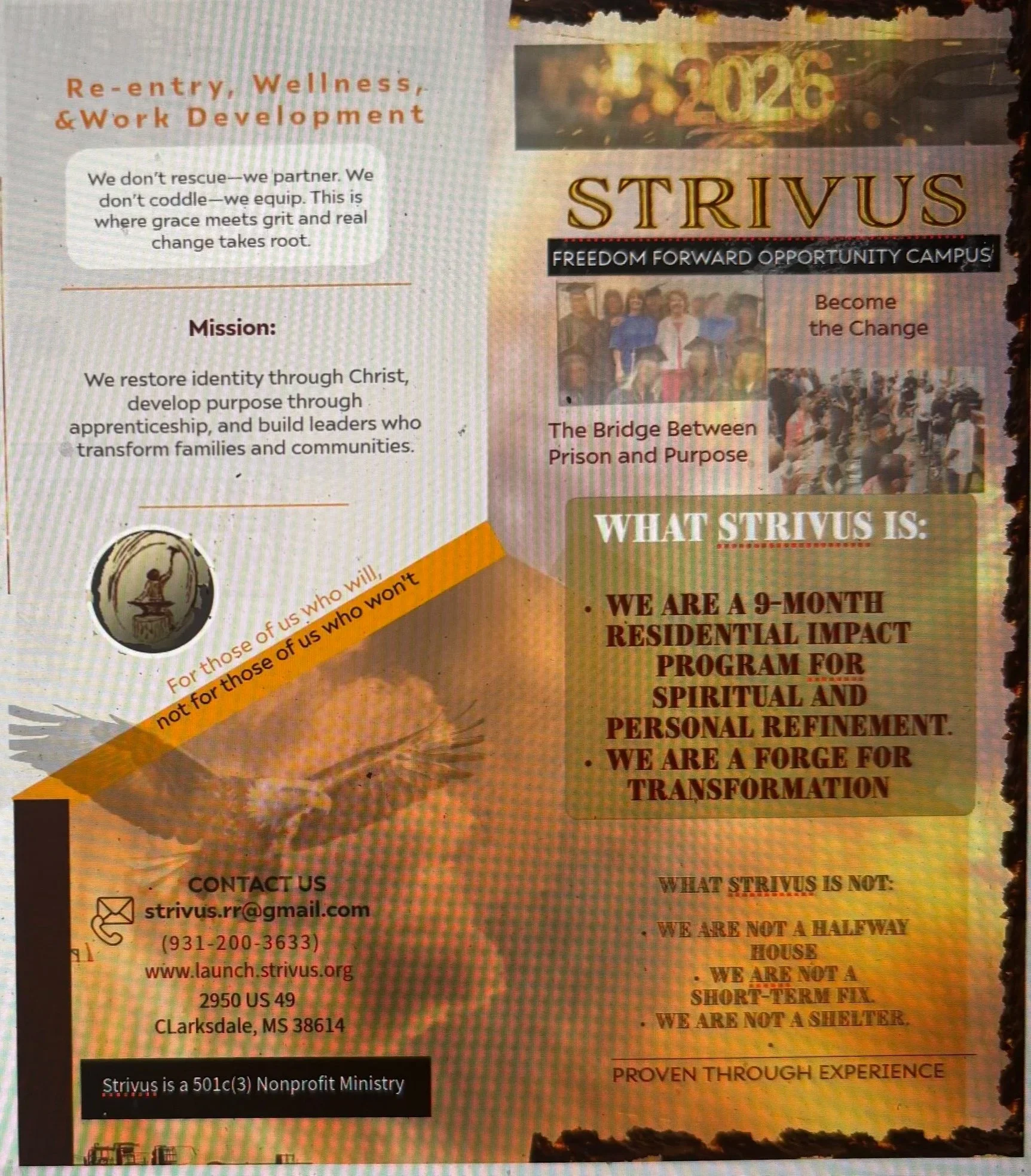
Strivus is an ecosystem model and implementation blueprint aimed at achieving long-term self-sustainability for both participating partners and the residents we serve. Designed as an alternative to fragmented programs and perpetual dependency, the model provides a framework for aligning people, resources, enterprises, and community assets into a system capable of sustaining impact, fostering growth, and creating independence and stability that endures over time.
Organizations interested in implementing the Strivus model within their own communities are encouraged to contact us to learn more about partnership, adaptation, and implementation support.
———————————————————————————————————————————————————————-
Founded on Experience. Built for Impact.
STRIVUS, Inc., and the strategic ecosystem model behind it, were founded by Sonya Waites. Drawing from decades of experience developing and implementing successful recovery, reentry, education, and community-based initiatives, Sonya envisioned a model that could move beyond fragmented services and create sustainable pathways to transformation.
As President of STRIVUS, Sonya provides leadership for the development, implementation, and expansion of the ecosystem model, helping organizations and communities align resources, create collaborative partnerships, and build systems designed for long-term impact and self-sustainability. Prior to founding STRIVUS, Sonya played a key role in creating and operating successful programs within correctional and residential settings throughout Louisiana, helping individuals overcome barriers, rebuild purpose, and successfully transition toward stable and productive lives.
Dedication
STRIVUS is dedicated to the memory and influence of Linda Laing, whose belief in people, commitment to service, and unwavering support helped shape the foundation upon which so much of this work was built.
Special recognition is also given to the original supervisors and team members whose dedication, leadership, and service were instrumental during the formative years of this journey:
Linda Laing
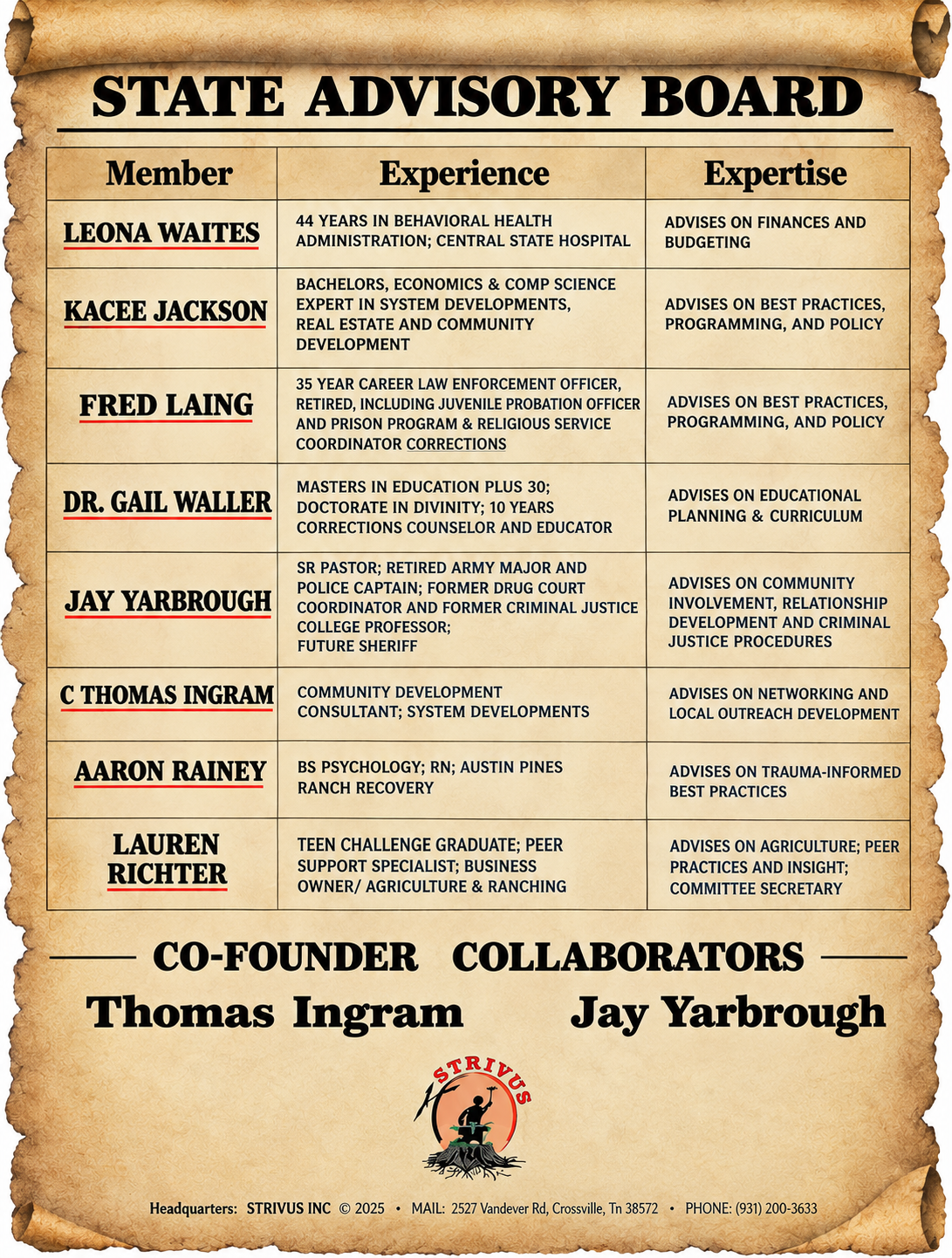
Dr. Gail Waller
April Coody
Debbie James
Their contributions helped establish a culture of compassion, accountability, and excellence that continues to influence the STRIVUS vision today.
Special Appreciation
A special note of appreciation is extended to Kaye Sharbono, now Director of LAPCAE, who served as a valued collaborator during the early years of development. Kaye's partnership, insight, and commitment to positive outcomes contributed meaningfully to the growth and advancement of many of the foundational concepts that would later become part of the STRIVUS ecosystem model.
STRIVUS also recognizes Kacee Jackson, whose dedication, belief in the mission, and steadfast support helped sustain the work through seasons of growth, transition, and development. Through advocacy, partnership, and a shared commitment to creating opportunities for others, Kacee plays an important role in helping move the vision from concept toward reality.
———————————————
No meaningful work is built alone. The STRIVUS vision stands on the contributions of many individuals who invested their time, talents, wisdom, and belief in the possibility of lasting change. To each of those contributors, we remain profoundly grateful.
We mobilize resources and people to crush systemic barriers.
Every program targets a choke point. We deploy data, speed, and grit. We measure results in lives transformed, not lines on a spreadsheet.
CONTINUED FROM HOME PAGE:
When individuals are forced, shamed, or isolated into changing a damaging lifestyle, they typically double down on their old habits because those habits—no matter how destructive—originally developed as a survival or coping mechanism.
True behavioral shifts occur when an alternative system
Isn't just an "option,"
but a demonstrably safer, more structured, and more rewarding
environment for their future.
Why Force and Isolation Fail
• The Resistance Trap: Coercion activates a person's defense mechanisms. When people feel banished or backed into a corner, their cognitive load goes entirely into survival mode, leaving no mental bandwidth for self-reflection.
• The Void Paradox: Forcing someone to drop a damaging lifestyle without replacing it creates a dangerous vacuum. If the underlying needs (safety, connection, status, or escape) aren't met by a new structure, the person will inevitably return to what they know.
Elements of a System That Works
To replace a deeply ingrained lifestyle, an alternative framework must prove itself across three distinct pillars:
1 Survival (The Foundation): The new system must offer psychological and physical safety that matches or exceeds the old lifestyle. It has to feel stable, consistent, and reliable enough that the individual can let their guard down.
2 Growth (The Vehicle): It must provide a clear, progressive ladder. Whether through structured skill-building, measurable milestones, or tangible responsibilities, the individual needs to see themselves moving forward, not just stagnating in "recovery."
3 Purpose (The Destination): This is the ultimate differentiator. True transformation takes root when an individual finds a role, a community, or a calling where they are needed. Transitioning from "someone receiving help" to "someone contributing value" completely rewires identity.
Ultimately, people don't abandon a lifestyle because they are told it's bad; they abandon it when they look at a new, structured environment and realize,
"This system actually works better for my life than the chaos I've been relying on."
This is the Strivus Impact.
We guide our residents in building lives for themselves that are worth staying sober for.
Join the Mission. Own the Impact.
Submit the form; let's revolutionize change together today.